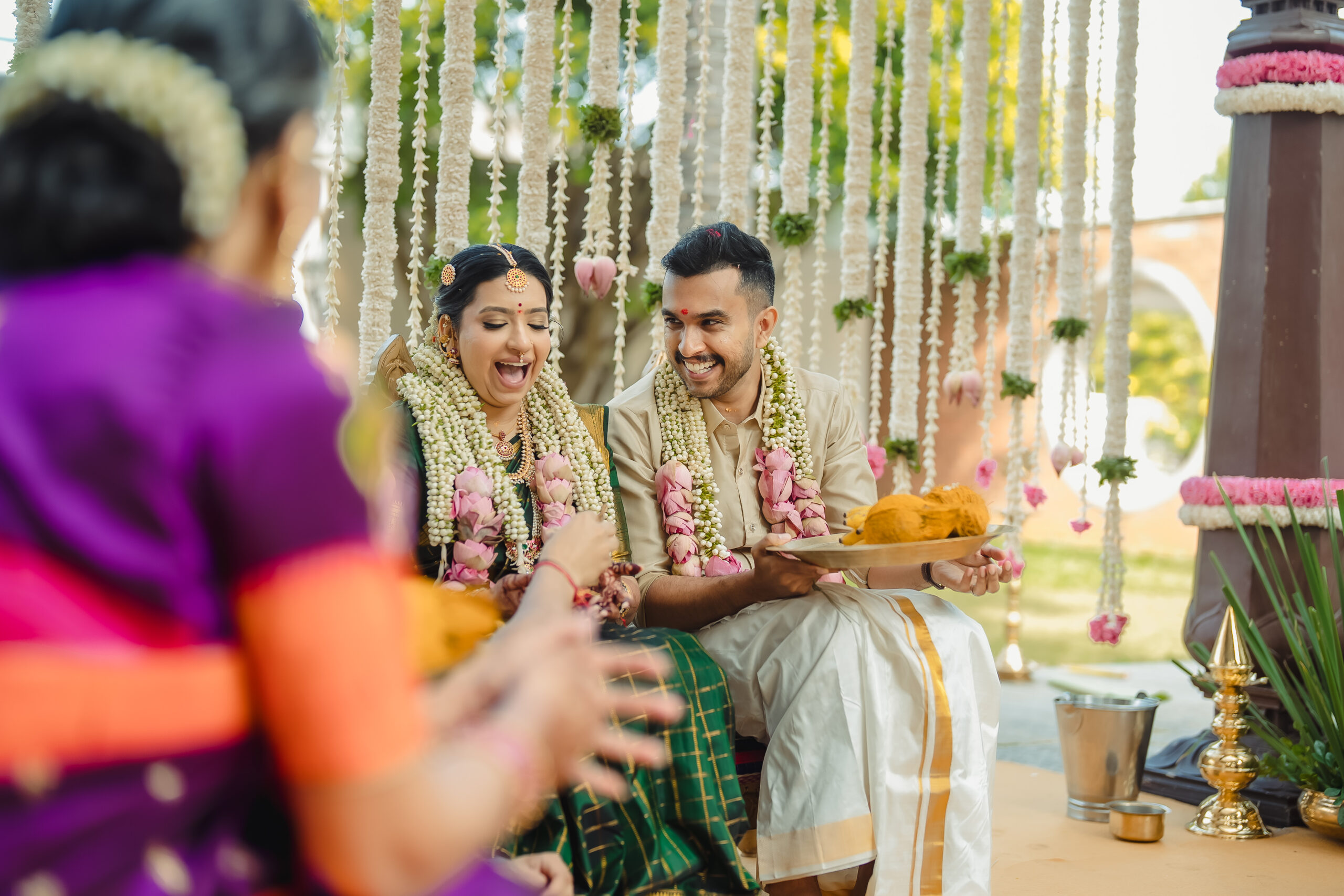

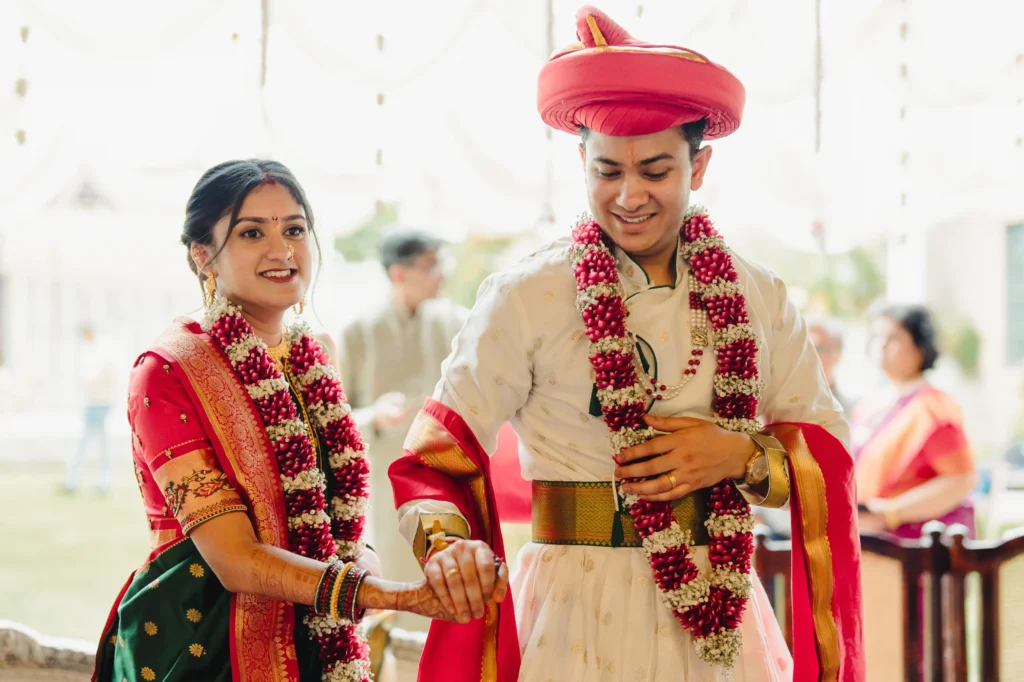
A Maharashtrian wedding is simple in appearance, yet deeply layered with meaning. Every ritual- whether performed quietly at home or in a decorated mandap- reflects values of family, purity, and commitment. Understanding Traditional Maharashtrian Wedding Rituals helps you appreciate not just the ceremony, but the cultural philosophy behind it.
Maharashtrian Wedding Rituals Step by Step
The sequence of Maharashtrian wedding rituals is thoughtfully structured, beginning days before the wedding and culminating in sacred vows.
Pre-Wedding Rituals in Maharashtra
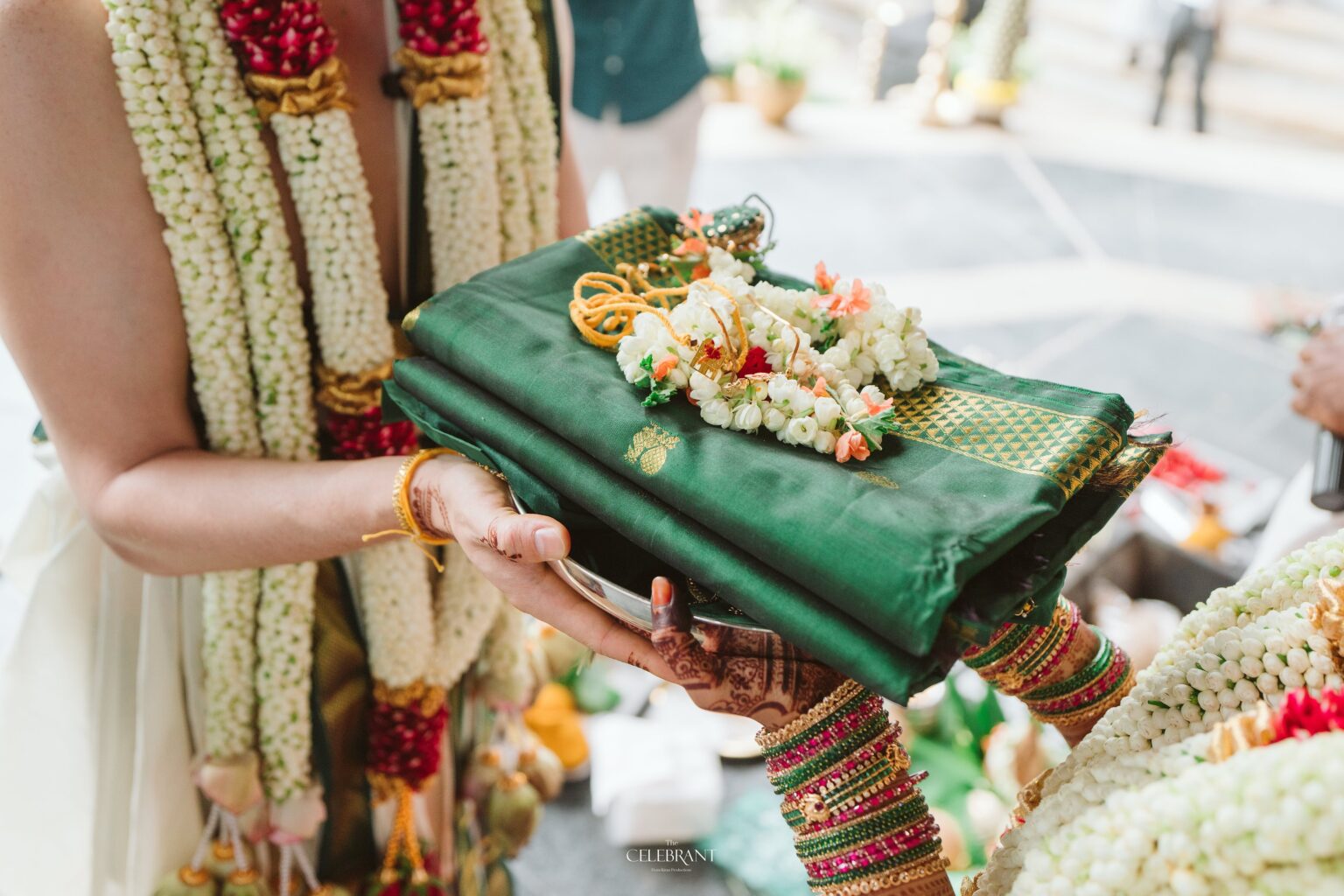
The journey begins with Sakhar Puda, where the groom’s family presents sweets and a saree to the bride, symbolising acceptance. It marks the official engagement.
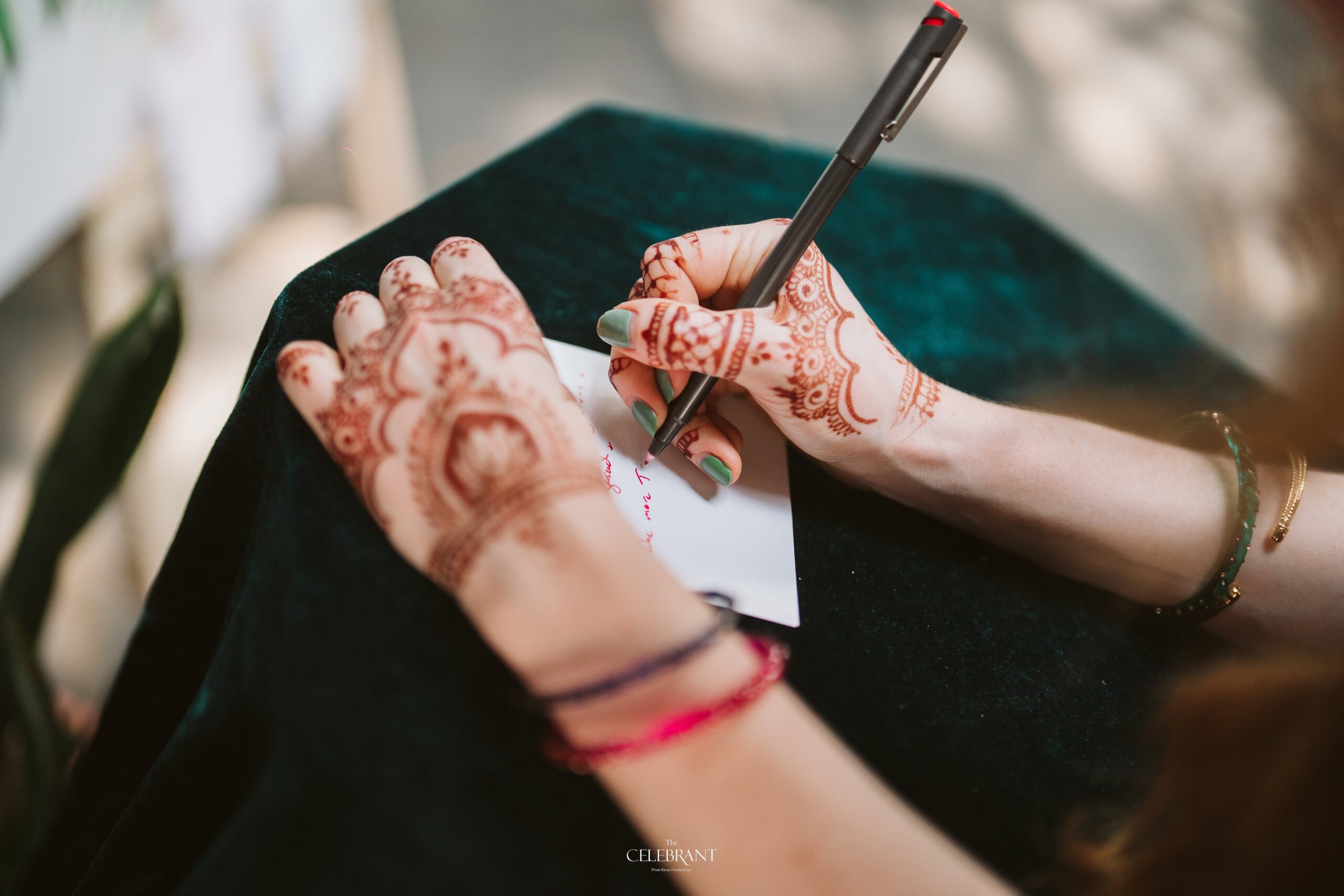
Next comes the Halad ceremony in Maharashtra, where turmeric paste is applied to both bride and groom. This ritual is believed to purify the body and bring a natural glow before the wedding. Telugu families follow a closely related custom known as the Pellikuthuru ceremony, performed for the bride a day before the wedding.
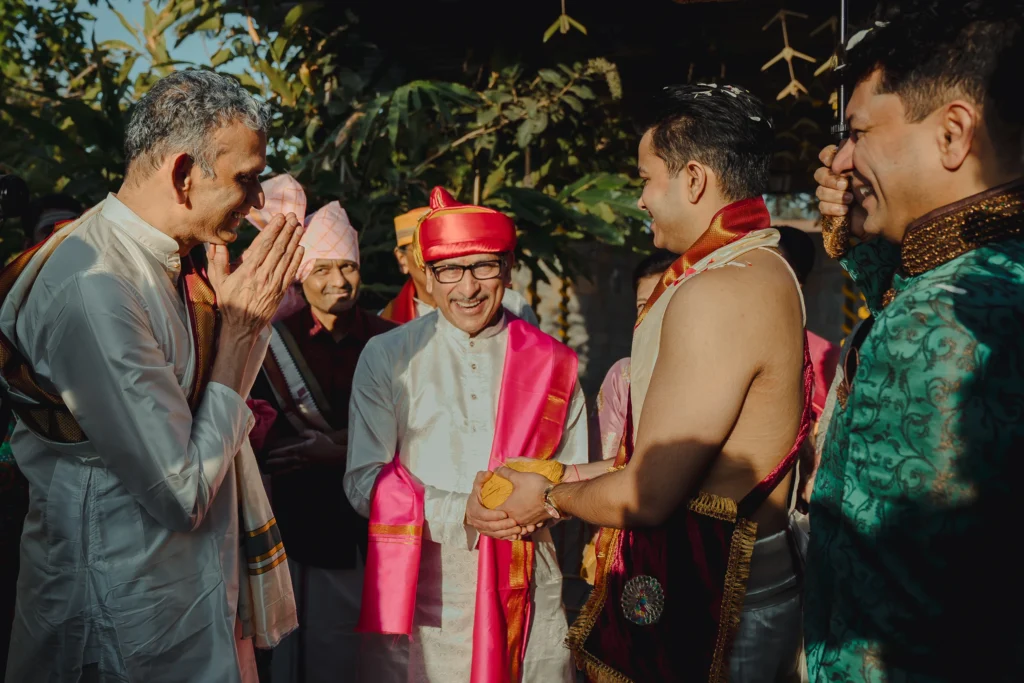
Another important ritual is Simant Poojan, where the groom is welcomed by the bride’s family, signifying respect and union between the two families.
Maharashtrian Wedding Ceremony Rituals
On the wedding day, the atmosphere is calm yet sacred.
The ceremony begins with the Antarpat ritual, where a cloth is held between the bride and groom, preventing them from seeing each other. As auspicious chants are recited, the cloth is lowered, marking their first glance as partners.
This is followed by the Kanyadaan Maharashtrian wedding, where the bride’s parents formally give her hand to the groom, entrusting him with her happiness and well-being.
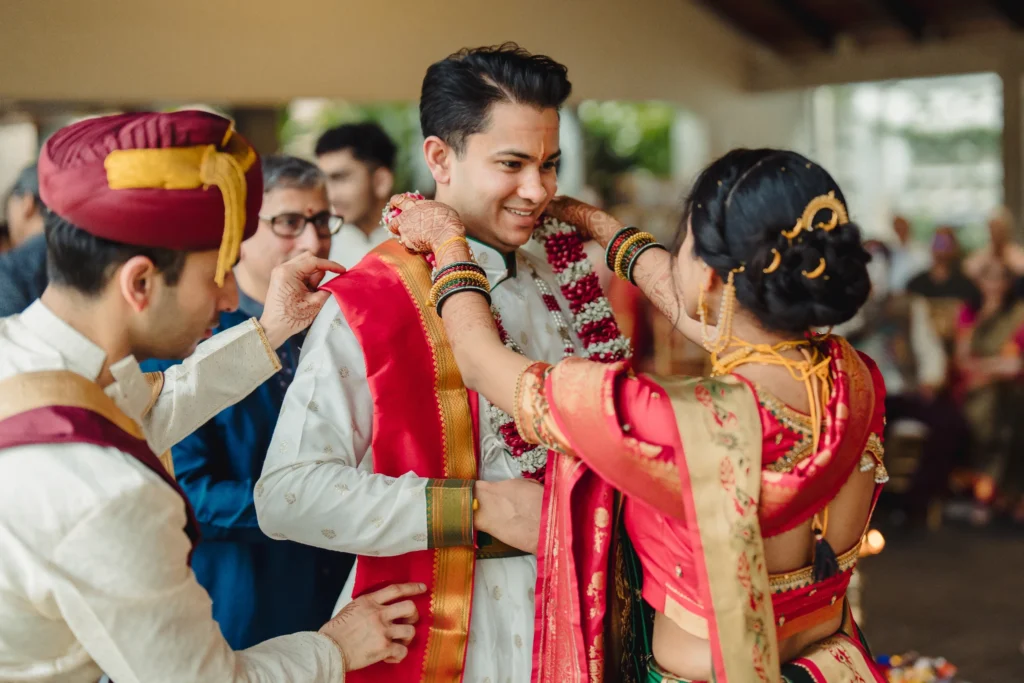
The couple then performs the Saptapadi Maharashtrian wedding, taking seven sacred steps together. Each step represents a promise- ranging from nourishment and strength to companionship and loyalty.
These rituals form the heart of Maharashtrian marriage traditions, emphasising equality, trust, and shared responsibility.
Meaning of Maharashtrian Wedding Traditions
The meaning of Traditional Maharashtrian Wedding Rituals lies in simplicity and symbolism. Unlike elaborate displays, these ceremonies focus on emotional and spiritual connection. To see how such customs compare across cultures and religions, explore the meaning behind sacred wedding rituals in this guide for couples.
- Turmeric signifies purification
- Antarpat represents patience and anticipation
- Kanyadaan symbolises trust
- Saptapadi reflects lifelong commitment
Each ritual quietly reinforces the idea that marriage is not just a celebration, but a partnership built on values.
FAQs
What is the order of the Maharashtrian wedding rituals?
The order typically follows Sakhar Puda, Halad, Simant Poojan, Antarpat, Kanyadaan, and Saptapadi, forming the complete Maharashtrian wedding rituals step-by-step sequence.
What is Sakhar Puda in a Maharashtrian wedding?
Sakhar Puda is the engagement ceremony where sweets are exchanged, and the bride is formally welcomed into the groom’s family.
What is the significance of the Halad ceremony in Marathi weddings?
The Halad ceremony purifies and blesses the couple. Turmeric is applied for its auspicious, healing, and beautifying properties.
What is the Simant Poojan ritual in a Maharashtrian wedding?
Simant Poojan is a welcoming ritual where the groom and his family are honoured by the bride’s family before the wedding ceremony.
Why is the Antarpat ritual important in Marathi weddings?
The Antarpat ritual builds anticipation and symbolises the transition from individual lives to a shared journey when the cloth is lowered.