Key Takeaways
- Shwetha and Anirudh’s celebrations were held from 28th to 30th August.
- The festivities opened with traditional pooja and rituals, followed by a Sangeet night.
- The wedding ceremony followed the sequence of Vedic rituals, from Kashi Yatra and Oonjal to Kanyadhaanam, Maangalya Dhaaranam and Saptapadi.
- Post-wedding rituals such as Ammi Midhithal and Nalangu added meaning and warmth.
- Traditional décor was designed to support the rituals, never to compete with them.
Shwetha and Anirudh’s Tamil Brahmin wedding united age-old Vedic rituals with thoughtful, graceful décor over three days of celebration. This is the story of those days, from the first pooja to the final Nalangu, with styling details that gave each moment its meaning.
Shwetha & Anirudh’s Wedding At A Glance
| Detail | Information |
| Couple | Shwetha and Anirudh |
| Tradition | Tamil Brahmin |
| Wedding Dates | 28th to 30th August |
| Pre-Wedding Ceremonies | Traditional Pooja and Rituals: The Sangeet Night |
| Wedding Ceremony | Traditional Tamil Brahmin rituals, from Kashi Yatra to Saptapadi |
| Planning and Décor | Aikyamm |
The Couple And Their Wedding Celebrations
Some couples wish for grandeur. Shwetha and Anirudh wished for meaning. From the first planning conversation, they stated clearly that every ritual their families held dear must take place, and each must be performed in its rightful way.
It is a request that our team treasures. At Aikyamm, founder Jeevan Jyothi and co-founder Sudhir Khedekar bring more than eight years of experience and over 300 celebrations of this kind, where tradition leads, and décor follows.
Understanding The Tamil Brahmin Wedding Traditions
A Tamil Brahmin wedding is not a single ceremony. It is a sequence of rituals rooted in the Vedas, each with its purpose, mantras and timing. Many are bound to an auspicious muhurtham, so even a fifteen-minute delay carries significance.
Why are there so many steps? Because each one marks a promise made between the couple, their families and the sacred fire.
Pre-Wedding Ceremonies: The Celebrations Begin
1. Traditional Pooja & Rituals
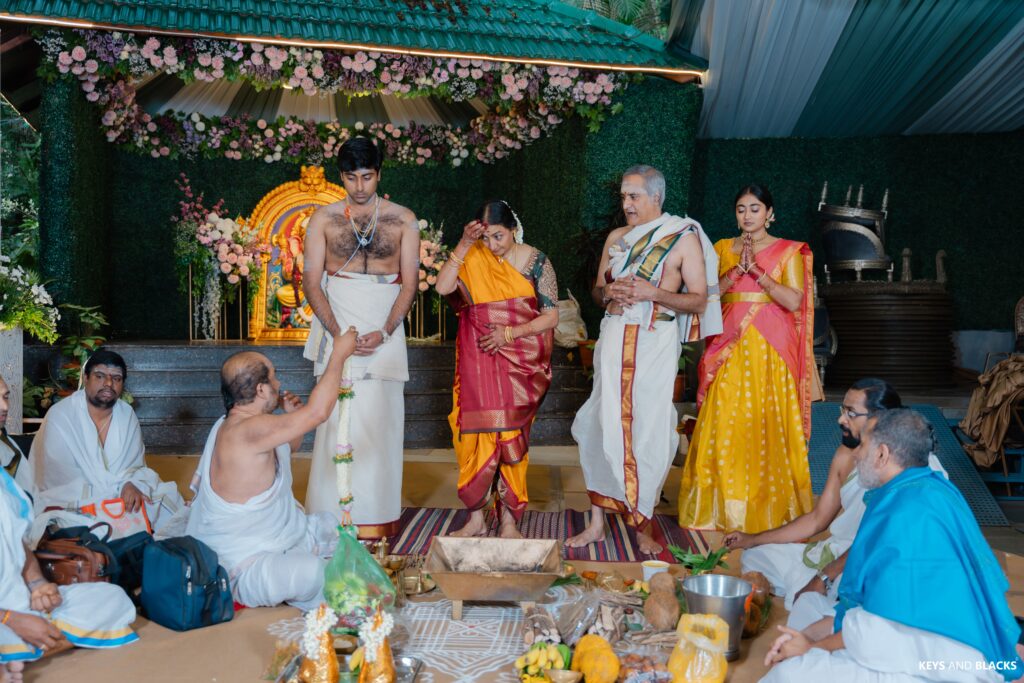
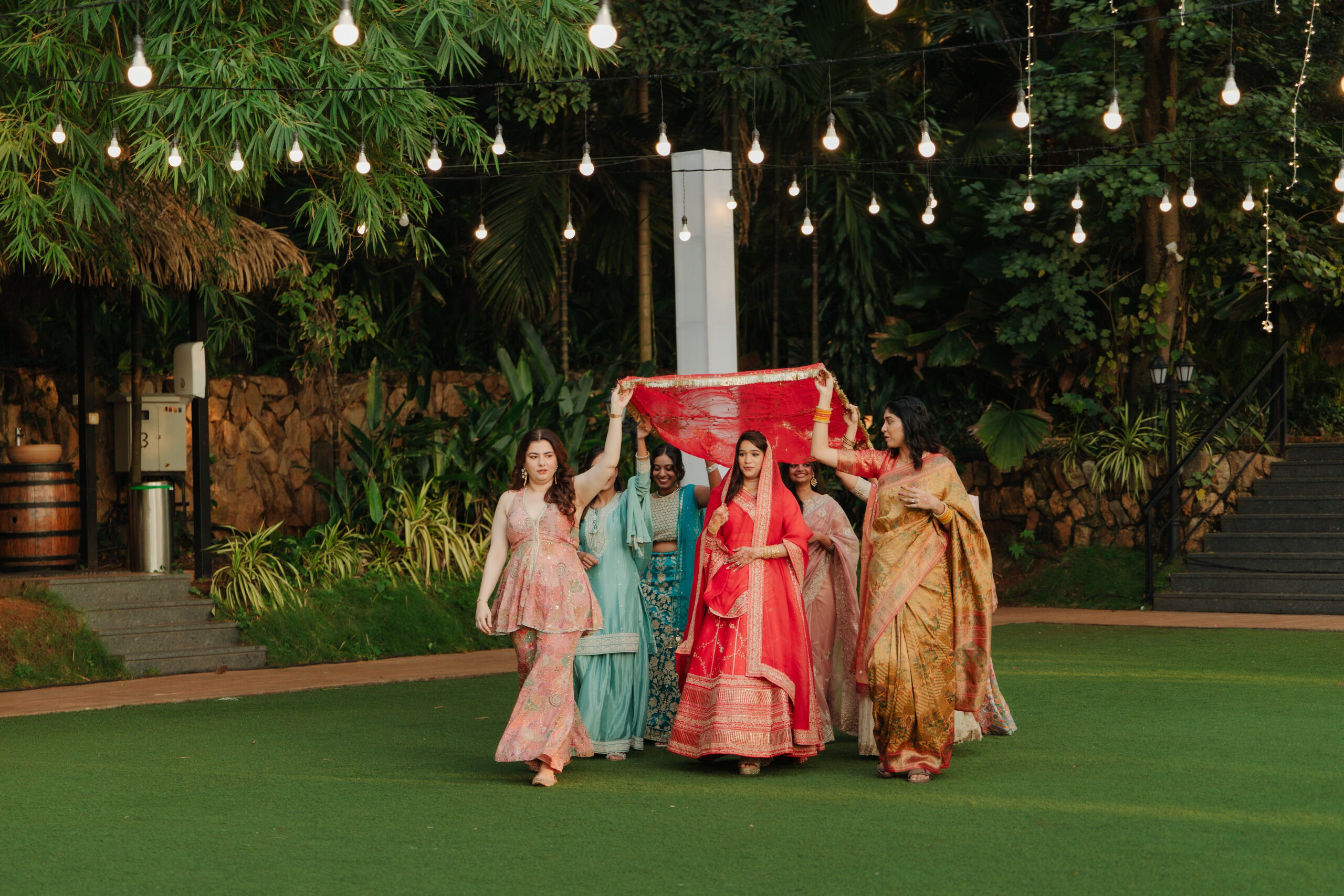
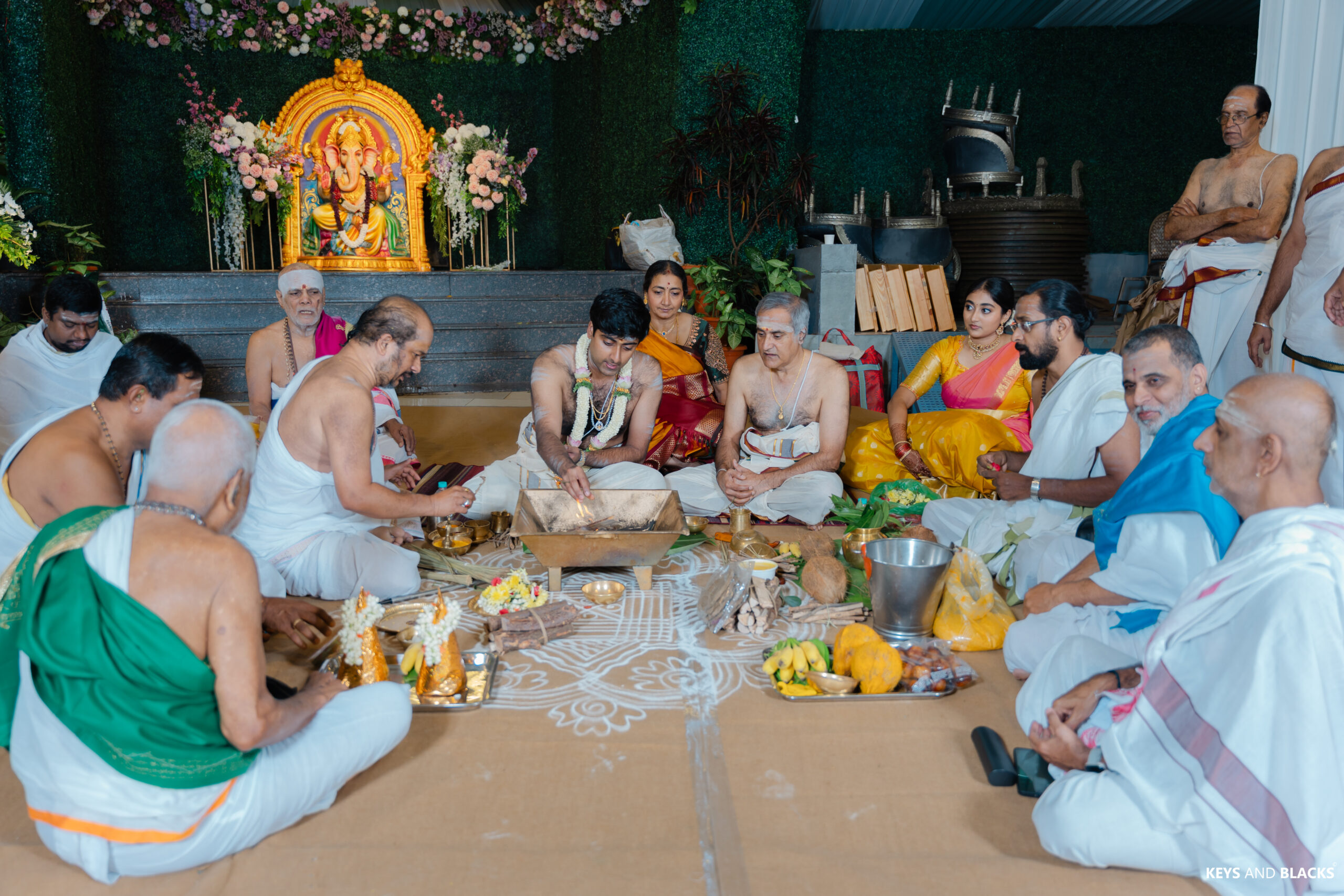
The celebrations began quietly, with close family. Before the music and the crowds, there was a pause for prayer. Sacred rituals were performed, and blessings were sought so that the days ahead would begin on a foundation of devotion.
The setting reflected the same reverence. The décor was traditional and the arrangements auspicious, designed to create a calm, sacred atmosphere where the family could gather, pray, and be present with one another.
In a Tamil Brahmin wedding, this stage is traditionally marked by rituals such as these:
- Pandhakal Muhurtham opens the celebrations. Families worship a bamboo pole that is later used to support the wedding pandal, seeking blessings for a smooth event.
- Vratham follows. The bride and groom pray separately at home, and a sacred thread is tied on their wrists, marking the start of the wedding rites.
- Jaanavaasam is the groom’s evening procession. Traditionally, he is welcomed by the bride’s family with music and lamps.
- Nichyathartham is the formal engagement. The families exchange gifts, the wedding date is announced, and the bride receives a new saree.
2. The Sangeet Night
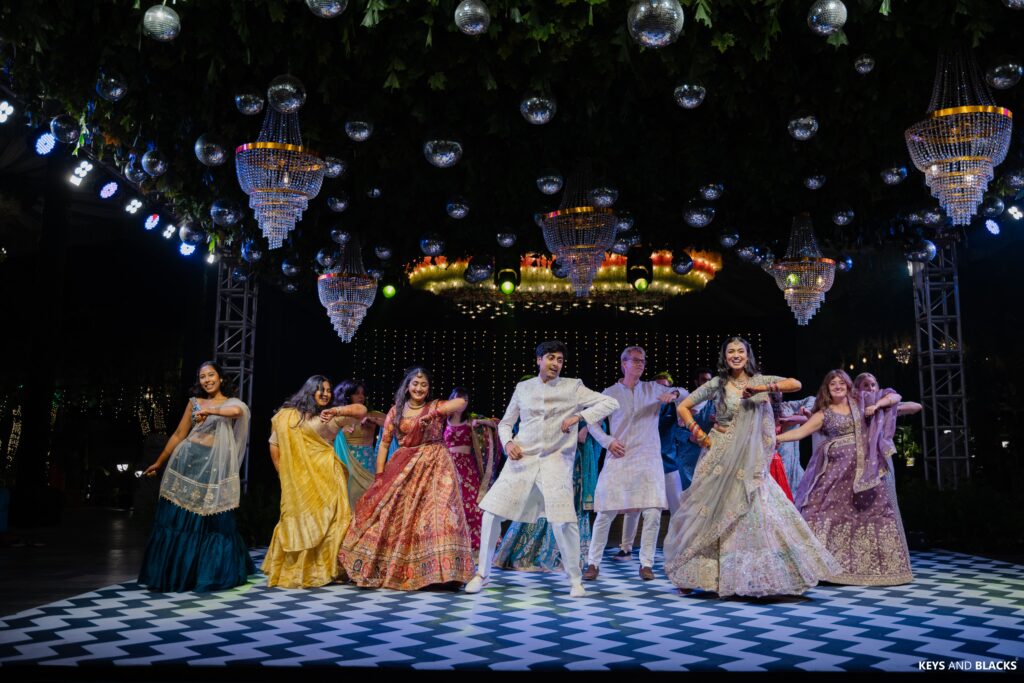
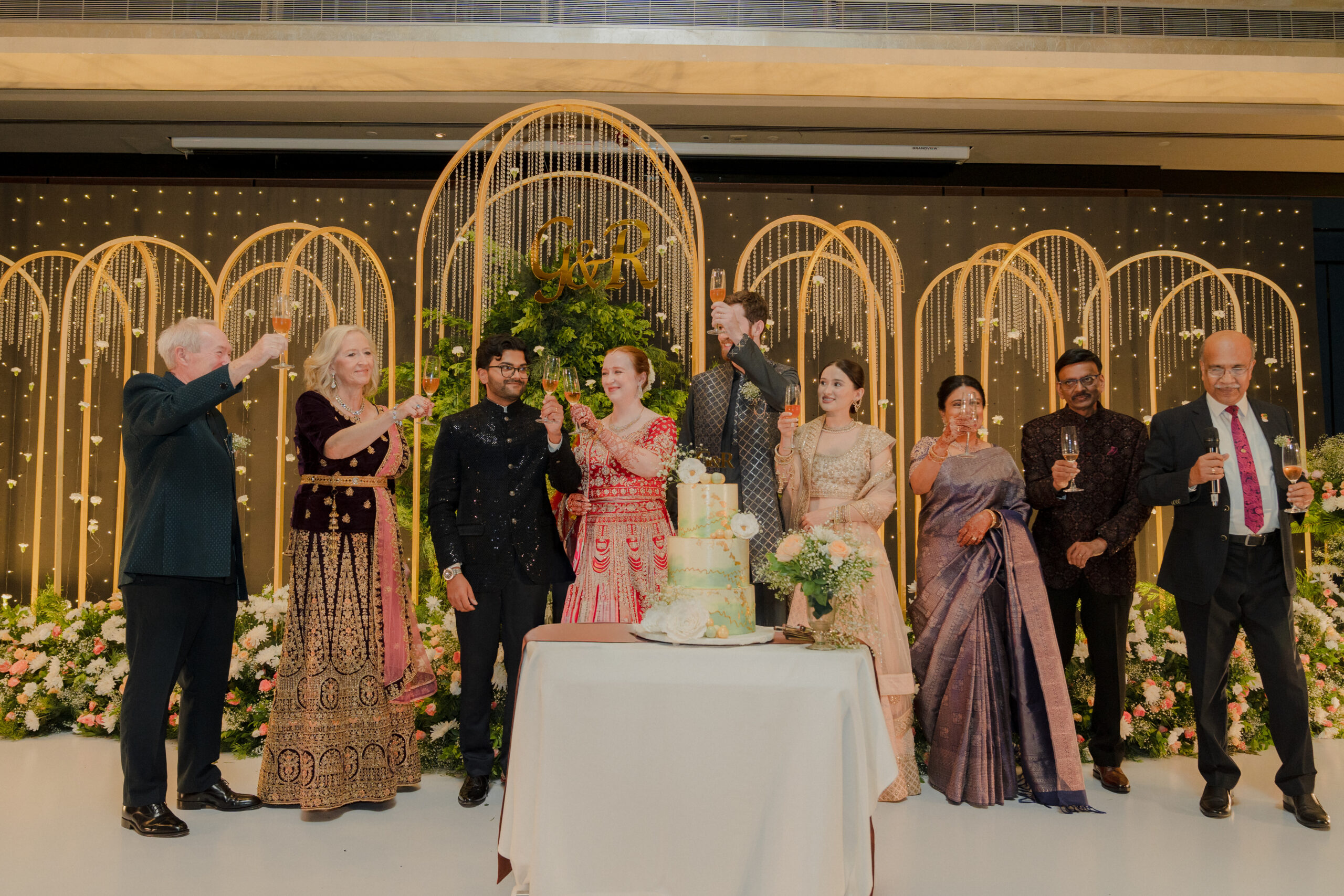
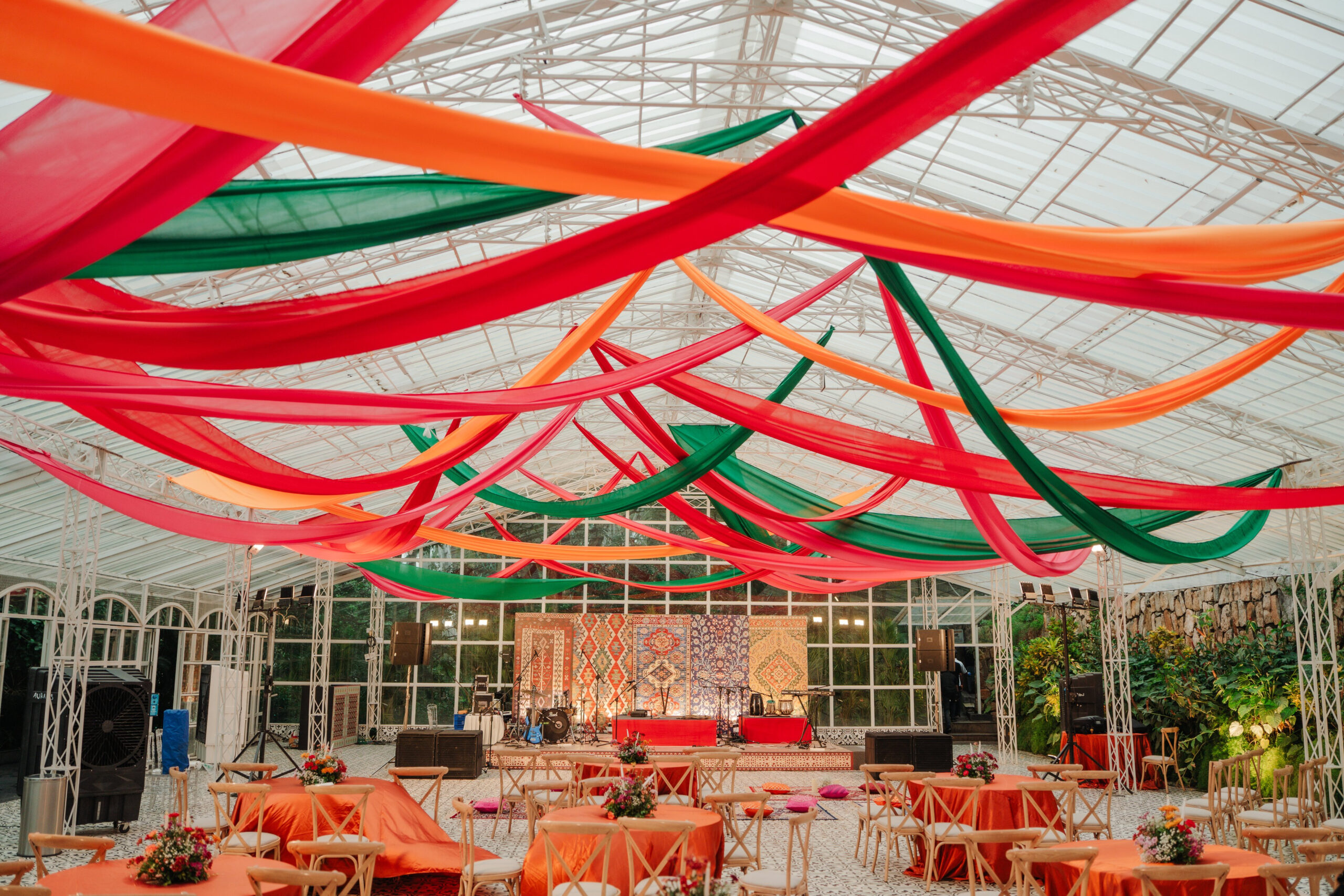
After the stillness of prayer came an evening of joy. The Sangeet Night filled the venue with music, dance and high-spirited performances, as family and friends took the stage to celebrate the couple.
The atmosphere was shaped with care. Glamorous ambient lighting and festive party décor set a luminous backdrop, and the couple and their guests were styled in coordination for the evening, so every photograph carried the feeling of the celebration.
This contrast gave the three days their rhythm: reverence in the morning of the celebrations and delight by night.
The Traditional Wedding Ceremony
1. The Wedding Setup & Ambience
Guests were welcomed in the traditional manner. Banana trees stood at the entrance, mango-leaf thoranams framed the doorways, and a hand-drawn kolam greeted every arrival.
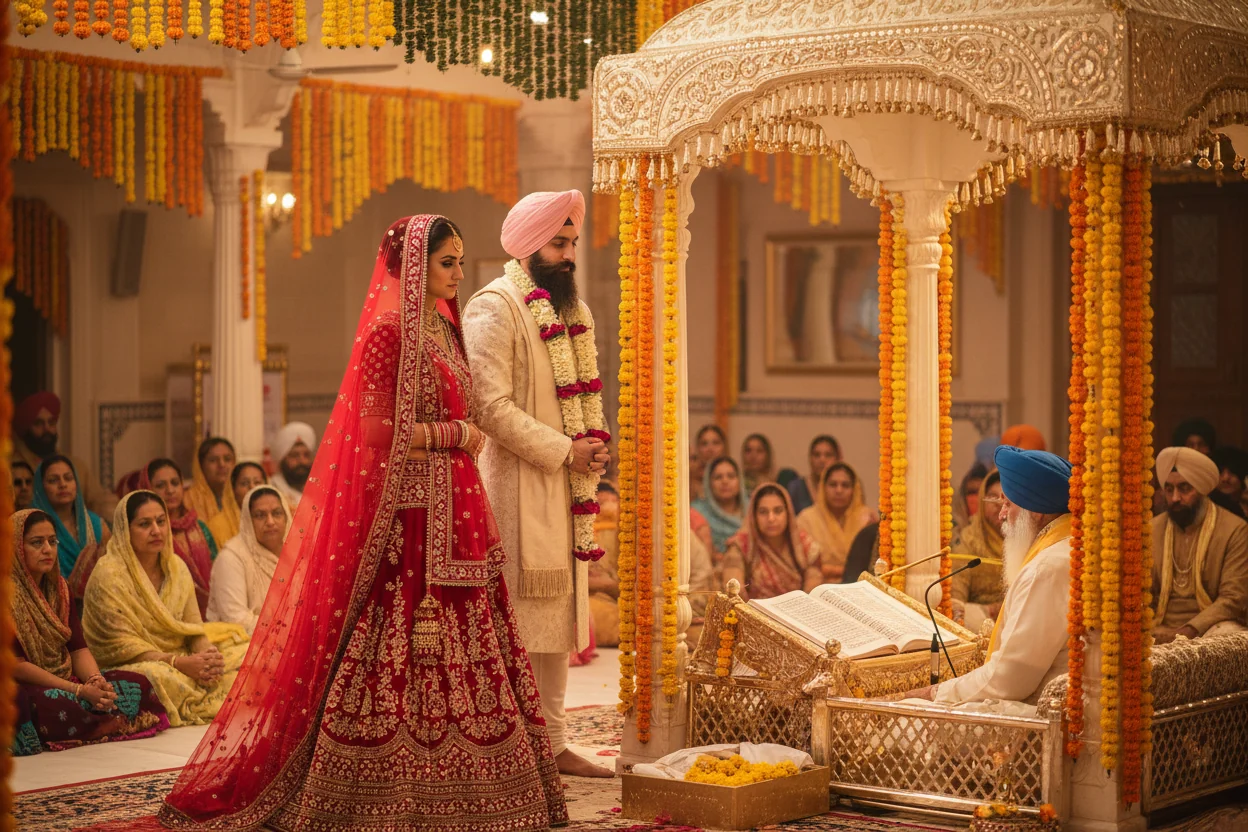
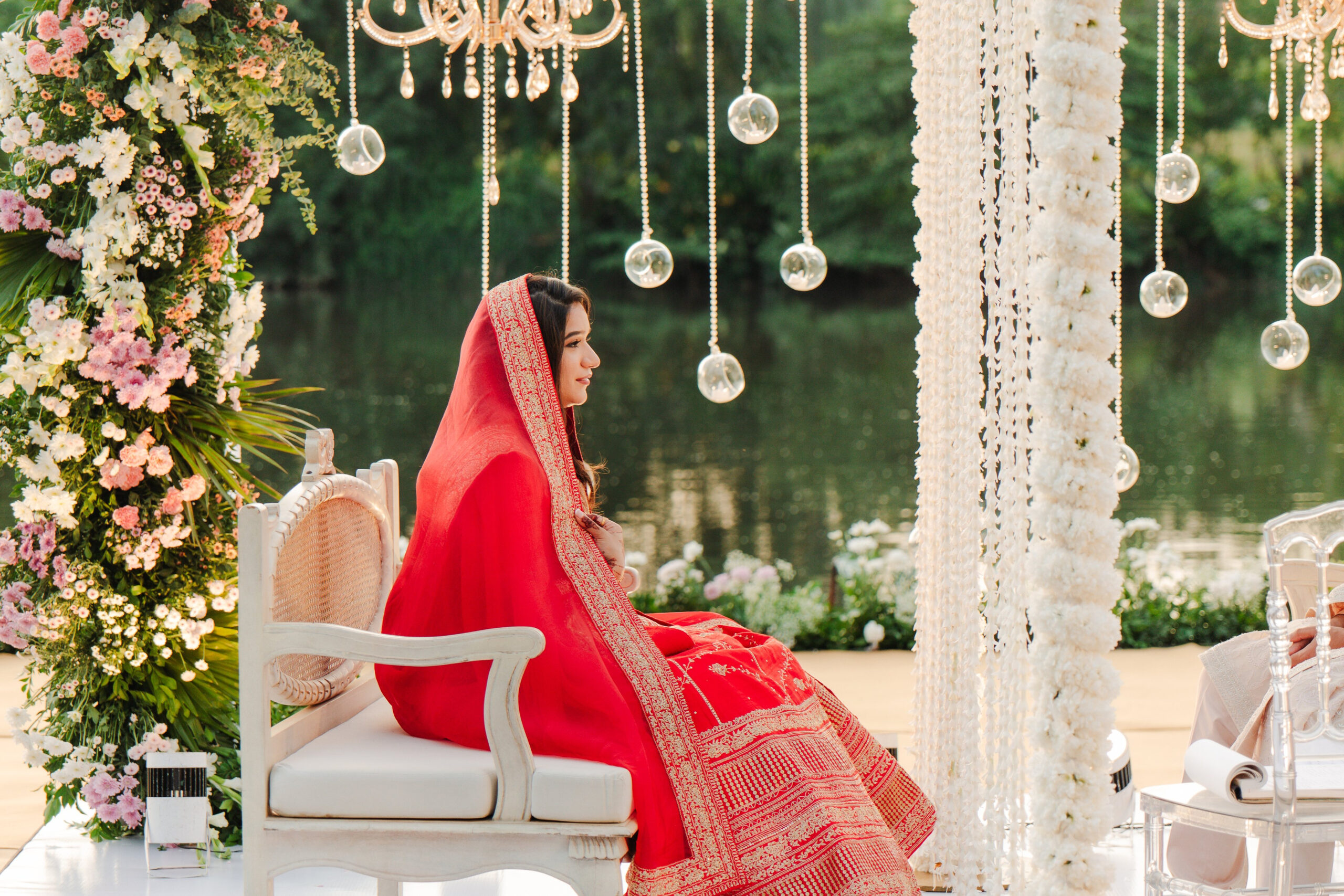
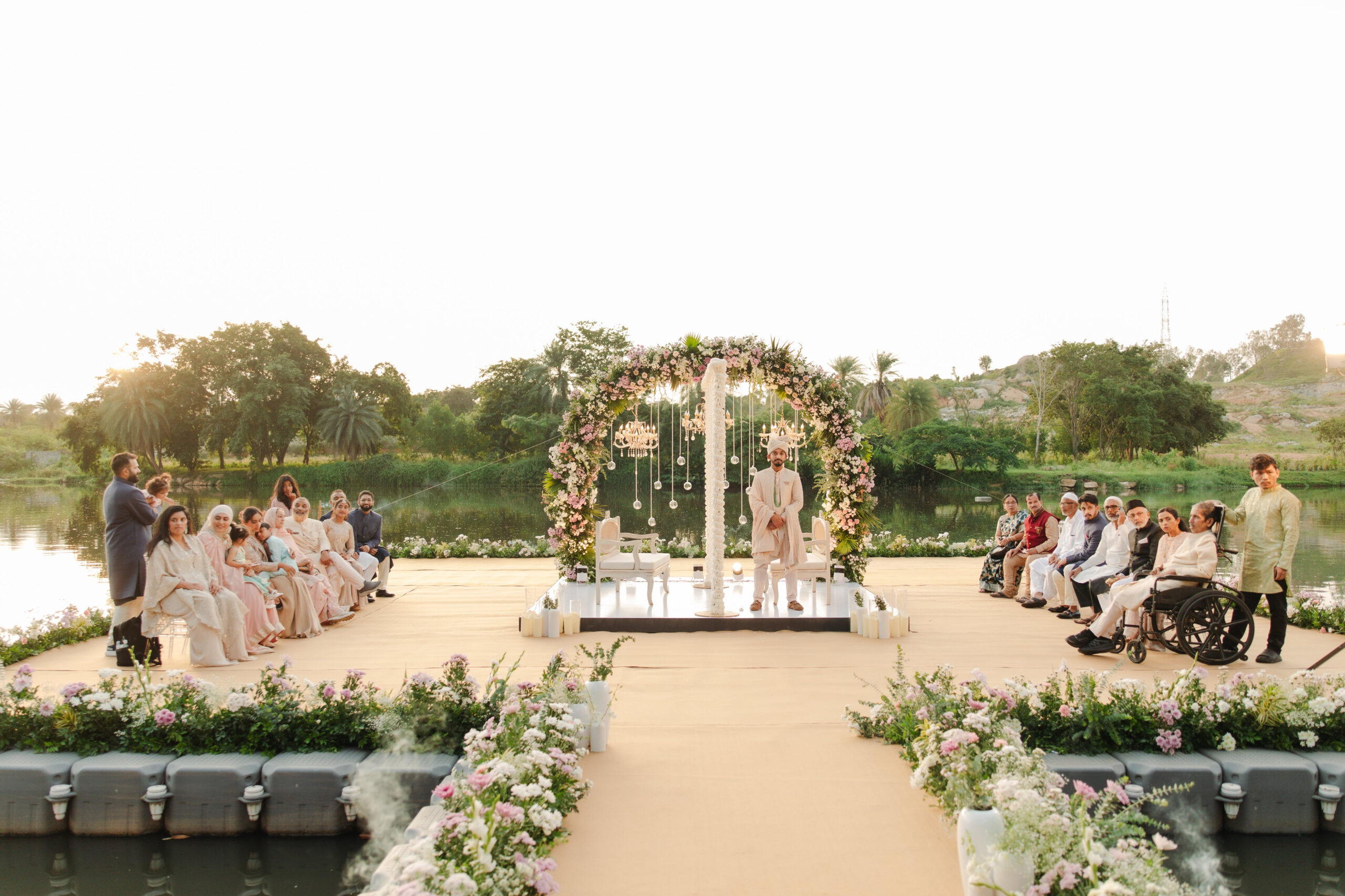
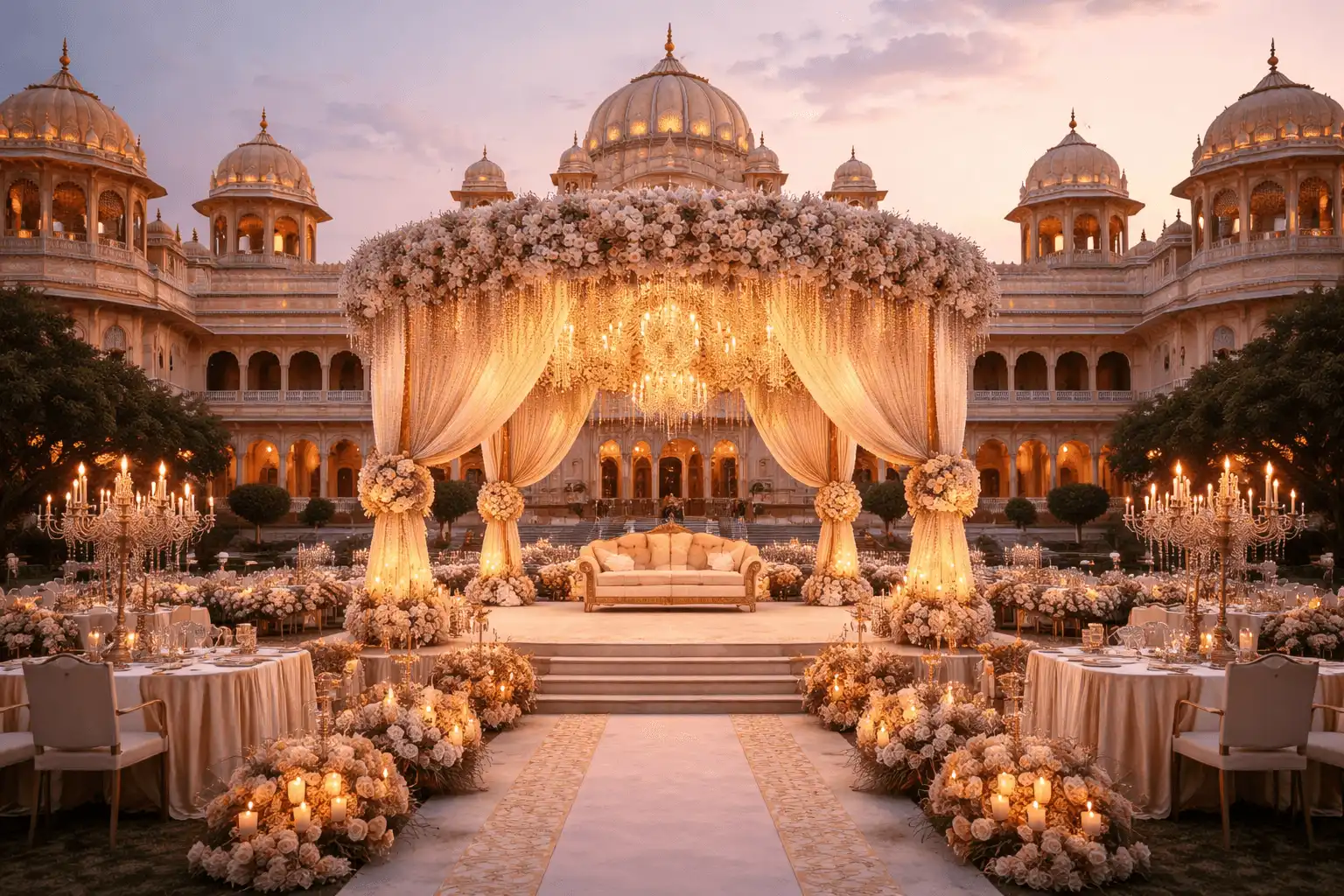
Inside, the mandap was designed with floral décor and ceremony lighting that complemented the rituals. Flowers were chosen for their fragrance and symbolism: jasmine, marigold, roses and lotus. Brass kuthuvilakku lamps, traditional Kerala lamps, cast a warm glow against rich silk drapes.
One principle guided the design: the mandap must remain uncluttered. Priests require clear space around the homam, families need room to sit close, and photographers need clean sightlines so that no structure ever stands between the family and the moment the thaali is tied.
2. Sacred Rituals & Customs
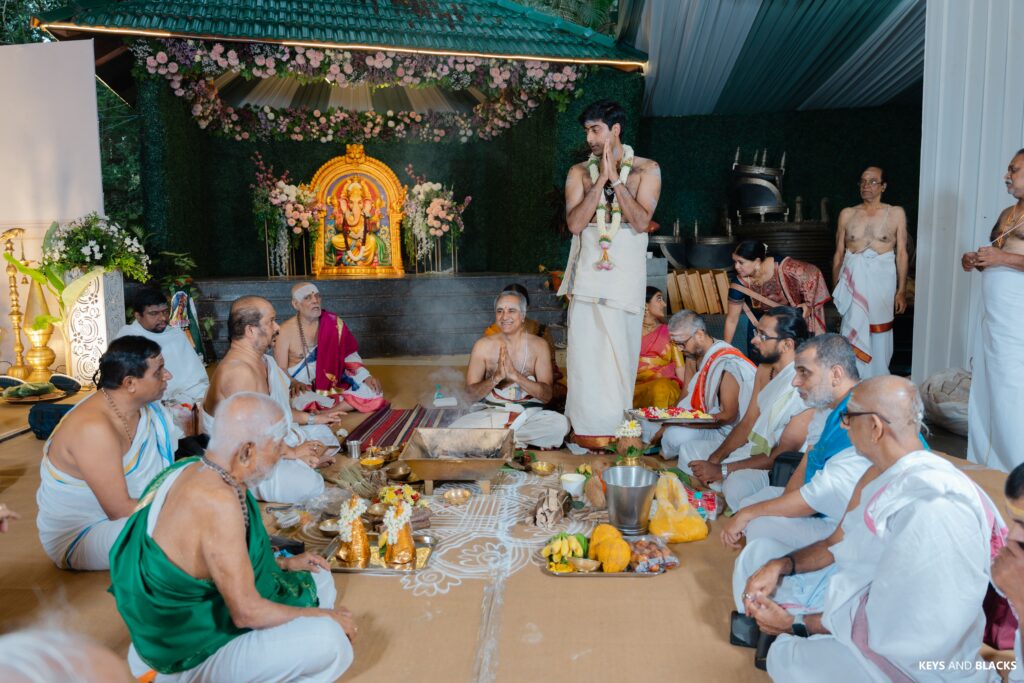
Each custom carried meaning, and each was given its time.
Kashi Yatra brought lightness at the start. The groom sets out for Kashi with an umbrella, a hand fan and a walking stick, declaring that he would rather live as an ascetic. The bride’s father stops him and persuades him to marry his daughter instead. The gathering laughs, and the ceremony begins in joy.
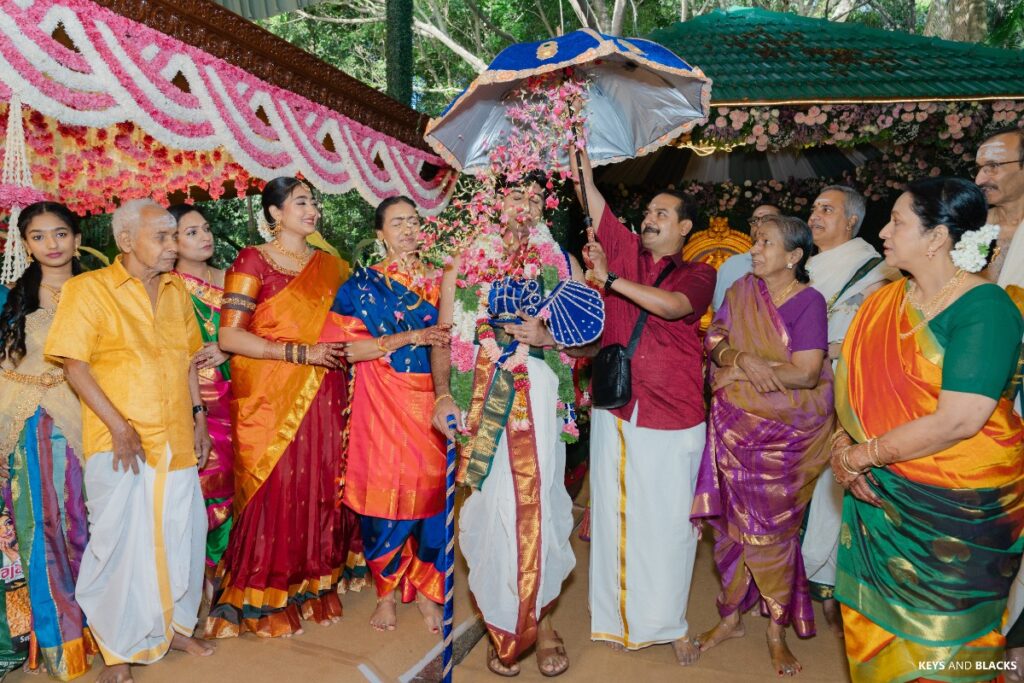
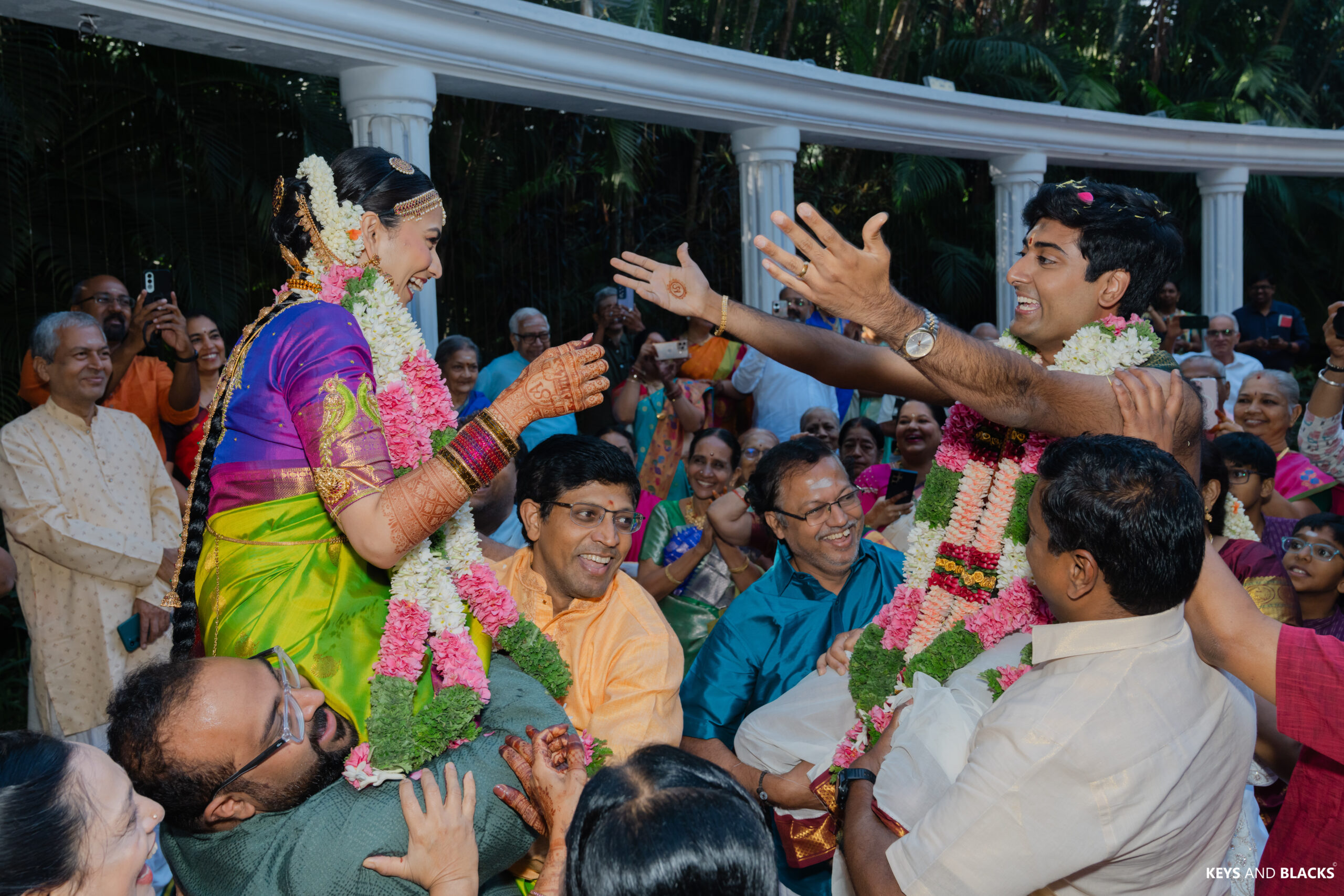
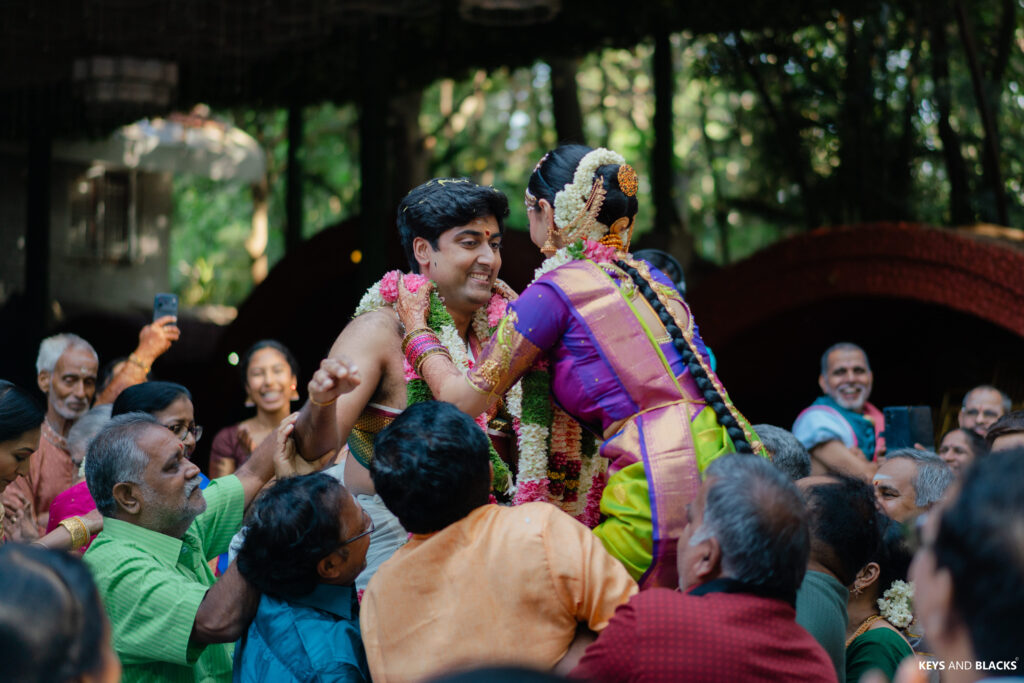
Maalai Maatral followed. The bride and groom exchange garlands three times, often lifting them onto their uncles’ shoulders. A brief word with the uncles beforehand ensures a confident lift and a memorable photograph.
Oonjal seated the couple on a decorated swing. Married women sang traditional songs, offered coloured rice balls and circled the couple with a lamp to ward off negativity. The gentle motion of the swing symbolises the ups and downs of life, faced together. The flower-wrapped Oonjal became a favourite spot for family portraits.
Kanyadhaanam was the emotional heart of the day. The bride sat on her father’s lap as he placed her hand in the groom’s, entrusting her to his care. It is a moment that is remembered in silence.
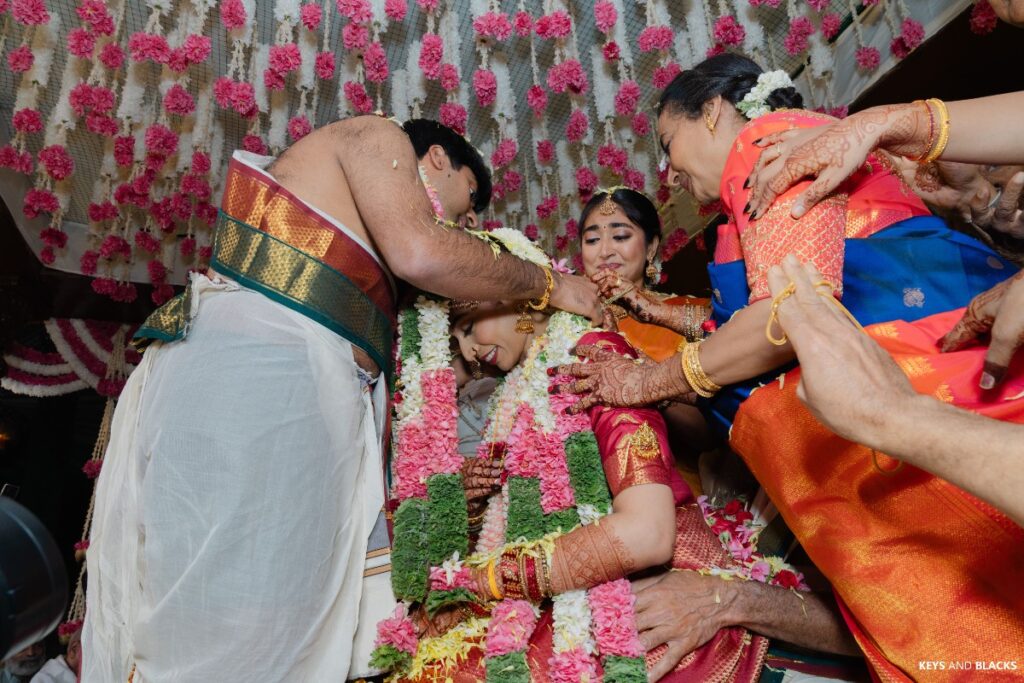
Maangalya Dhaaranam took place at the auspicious muhurtham. The groom tied the thaali with three knots as the nadaswaram and melam rose to a crescendo. Traditionally, the groom ties the first knot, and his sister ties the other two. Careful scheduling ensured that this moment took place exactly as planned.
Saptapadi sealed the marriage. The couple took seven steps around the sacred fire, each step representing a vow, from nourishment and strength to friendship and lifelong togetherness.
The rituals that follow the wedding carry their meaning:
- Ammi Midhithal: The bride places her foot on a grinding stone, a reminder to remain steady, like the stone, through every challenge of married life.
- Metti: The groom slips silver toe rings onto the bride’s toes, a lasting symbol of her married status.
- Laaja Homam: Puffed rice is offered into the sacred fire. The bride’s brother fills her hands with the rice, showing the family’s continued support.
- Nalangu: After the formal rituals, the couple play light-hearted games, from breaking papads to rolling coconuts, easing the nerves and bringing both families closer.
The elders’ blessings accompanied each moment, and their presence gave the ceremony its depth.
3. Traditional Attire & Visual Details
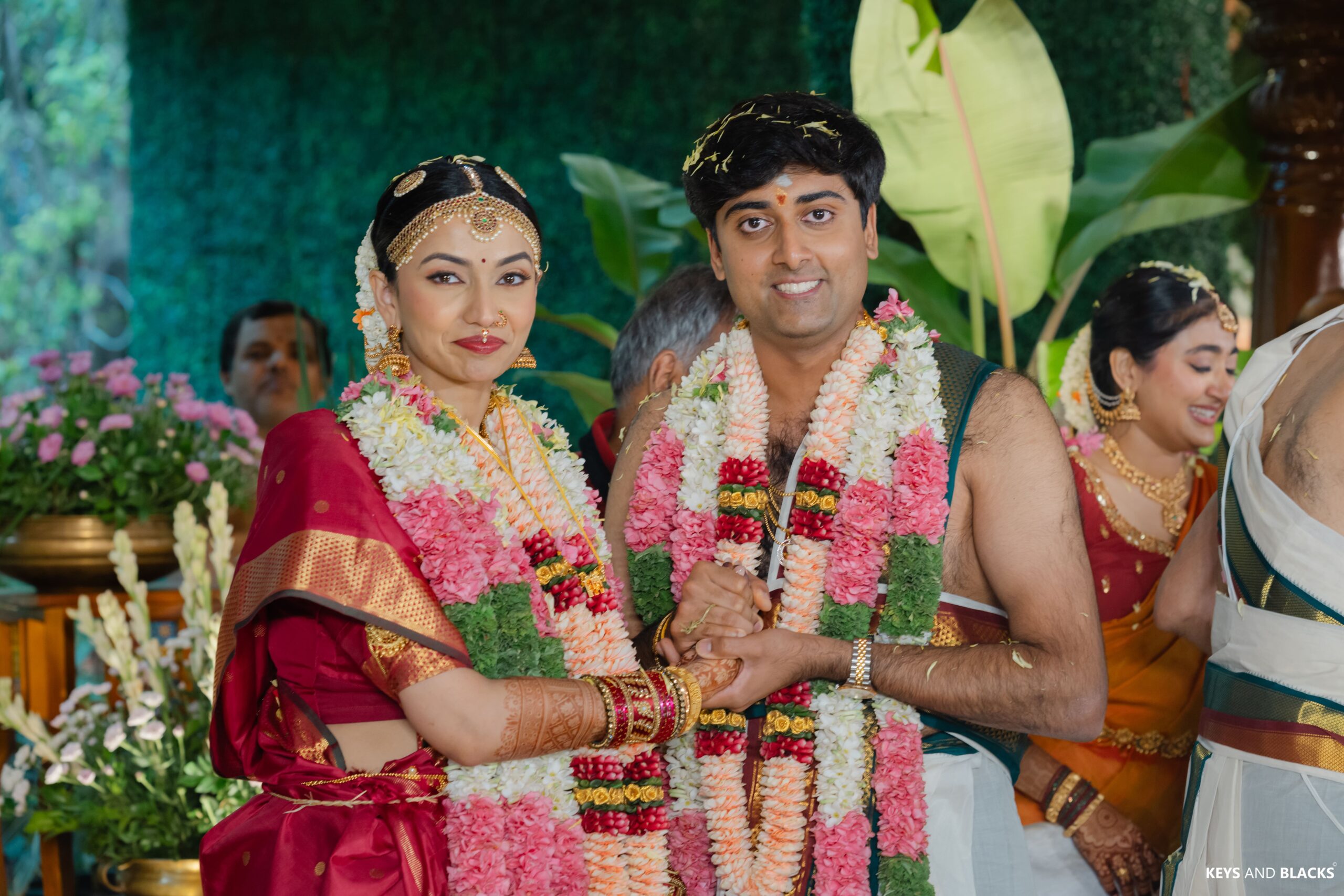
The couple’s attire was rooted in tradition. For the main rituals, a Tamil Brahmin bride usually wears a nine-yard silk saree called a madisar. The groom typically wears a veshti, a traditional wrapped dhoti, with an angavastram, a cloth draped over the shoulder.
Against the fresh flowers, brass lamps, and silk drapes of the mandap, these classic ensembles completed a picture that felt timeless.
Highlights From Shwetha & Anirudh’s Wedding
- Every ritual honoured: The sequence flowed from the opening pooja to Nalangu without hurrying the important moments.
- A Sangeet night to remember: Music, dance and glamorous lighting gave the evening its energy.
- Laughter at the Kashi Yatra: The playful procession set a joyful tone for the ceremony.
- A swing that held every eye: The flower-wrapped Oonjal became a favourite setting for family photographs.
- A muhurtham kept on time: Careful scheduling ensured the Maangalya Dhaaranam took place exactly as planned.
- Décor with purpose: Natural elements, fresh flowers and brass lamps kept the focus on tradition.
Planning a Tamil Brahmin wedding of your own? Work with a team that understands both the rituals and the logistics. Aikyamm’s ritual and cultural planning service is designed for exactly that.
FAQs
How long does a Tamil Brahmin wedding usually last?
Most celebrations span one to three days, depending on how many pre-wedding and post-wedding rituals the families choose to include. Shwetha and Anirudh’s celebrations were held over three days, from 28th to 30th August.
What is the most important ritual in a Tamil Brahmin wedding?
Maangalya Dhaaranam and Saptapadi are considered central, as they formally mark the marriage before the sacred fire.
What does the bride traditionally wear?
For the main rituals, the bride usually wears a nine-yard silk saree called a madisar. The groom typically wears a veshti, a traditional wrapped dhoti, with an angavastram, a cloth draped over the shoulder.
Why is the muhurtham so important?
The muhurtham is the auspicious time chosen for tying the sacred necklace, the thaali. Families build the entire day’s schedule around it.
Can a Tamil Brahmin wedding include modern décor?
Yes. Many couples combine traditional elements, such as banana trees and kolam (rice-flour floor art), with modern lighting. The only principle is that the décor must not obstruct the rituals.